From Cave Paintings to MCP Servers: Why We're Still Sharing Data Like It's 2005
In 1440, the printing press didn't just change publishing—it ended the manuscript era overnight. Today, we're at another inflection point: the shift from moving data to moving insights. Analytics as a Service and MCP-powered autonomous analytics represent a fundamental change in how humans share information, comparable to the jump from handwritten manuscripts to mass printing. And just like with Gutenberg's press, organizations that wait too long to adopt will find themselves obsolete.
The Last Time We Changed How Humans Share Information
In 1440, Johannes Gutenberg didn't just invent a printing press. He ended the manuscript era. Within decades, handwritten books—the dominant technology for 4,000 years—became obsolete. Not because they were bad, but because the world had fundamentally shifted.
We're in another one of those moments right now.
For 30 years, we've been moving raw data around the internet. APIs, CSV files, database exports—all variations on the same theme: 'I'll send you the ingredients, you figure out the recipe.' But what if we could just send the meal?
This is the shift from moving data to moving insights. From Paradigm 2 to Paradigm 4. And like Gutenberg's press, it's not an incremental improvement—it's a different game entirely.
The Paradigm Tax
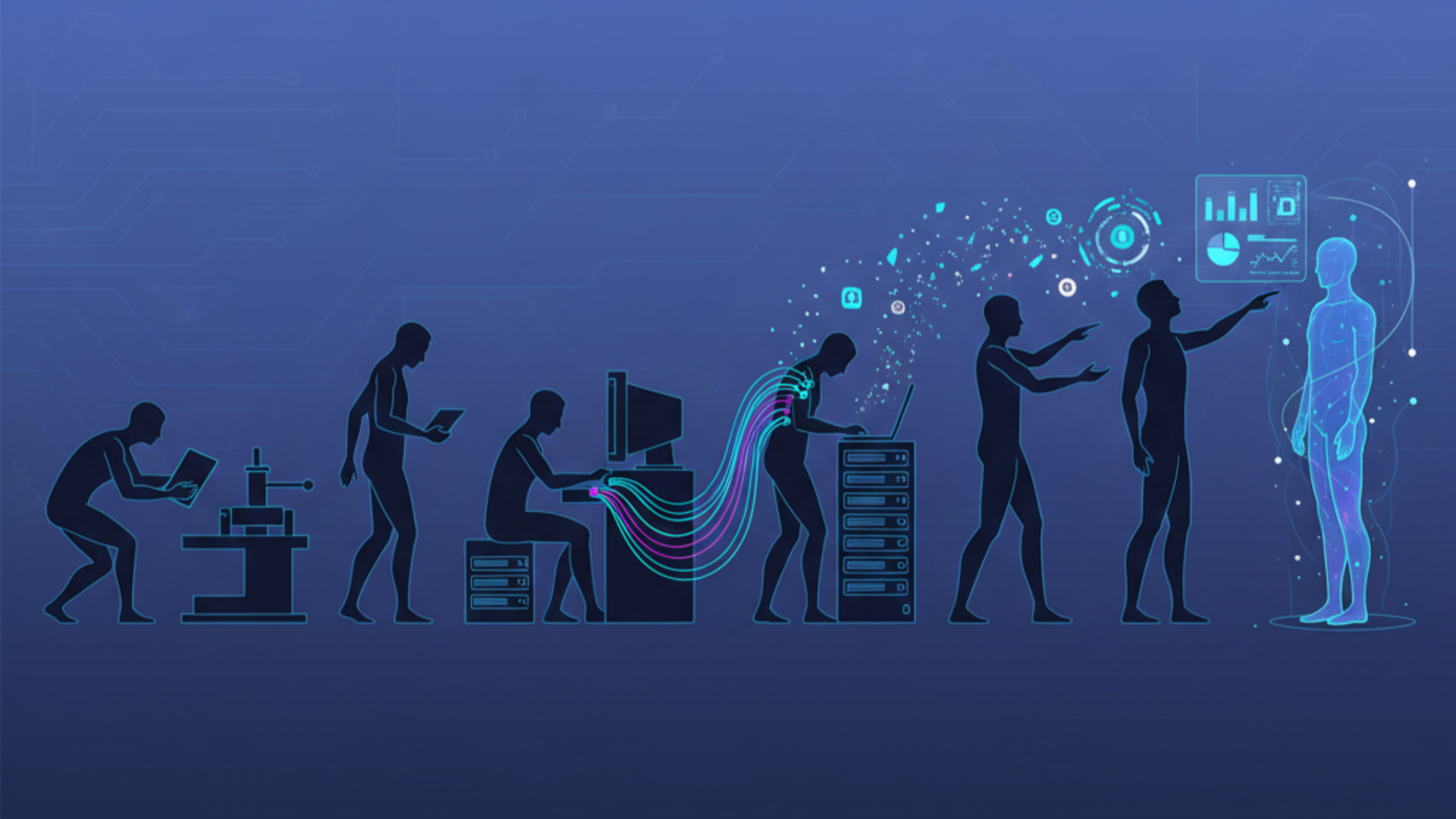
The Pattern: 5,000 Years of Evolution
Every major leap in civilization happened when we changed how we share information:
~3200 BCE: Written Language → Knowledge persists beyond lifetimes
~1440 CE: Printing Press → Mass distribution unlocks Renaissance
1969-1990s: Digital Networks → Instant global distribution
2024-Present: Analytics as a Service → Move insights, not data
The inflection point: We've been stuck in 'raw data movement' for 30+ years. The next evolution has already begun.
The Four Paradigms: Where Does Your Organization Sit?
| Paradigm | Technology | What Moves | Annual Cost* | Time to Insight |
|---|---|---|---|---|
| P1 Flat Files | CSV, Excel, FTP | Complete datasets | $11M | 15-30 days |
| P2 Raw Data APIs | REST, GraphQL | Raw database records | $8.54M | 2-5 days |
| P3 Analytics as a Service | Spartera, etc | Processed insights | $617K | <5 minutes |
| P4 MCP/Autonomous | AI agents, MCP servers | Context-aware insights | $490K | <30 seconds |
*Annual costs for 1,000-person organization sharing data across teams
Understanding the Paradigms
Paradigm 2: Raw Data APIs (Where 78% Are Stuck)
The Problem:
APIs return complete database records. Every client processes the same data independently. Want to know if compound X showed efficacy? Get 500MB of trial data, spend 40 hours processing it.
Why It's Breaking:
• Data volumes growing 3x faster than processing efficiency
• Electricity costs rising 40-267% (data center demand)
• Organizations spending millions moving data that creates zero value
Paradigm 3: Analytics as a Service (The Shift)
The Fundamental Change:
Instead of 'What data do you need?' ask 'What question needs answering?'
How It Works:
- Analytics run at the data source (zero data movement)
- Only insights transmitted
- Buyers purchase specific analyses, not data access
- Results answer business questions directly
The Spartera Model:
Our name means 'sharing' in Corsican. We recognized true sharing isn't about moving data—it's about moving knowledge.
Example: Instead of downloading 500MB of weather data to analyze, you ask Spartera's marketplace: 'Favorable weather forecast for Seattle next week?' → Get back: 'Unfavorable—reduce staffing 20%'
The Results:
• 80-95% cost reduction
• Time-to-insight: Days → Minutes
• No integration, no processing pipelines
Paradigm 4: MCP/Autonomous Analytics (The Future)
What MCP Enables:
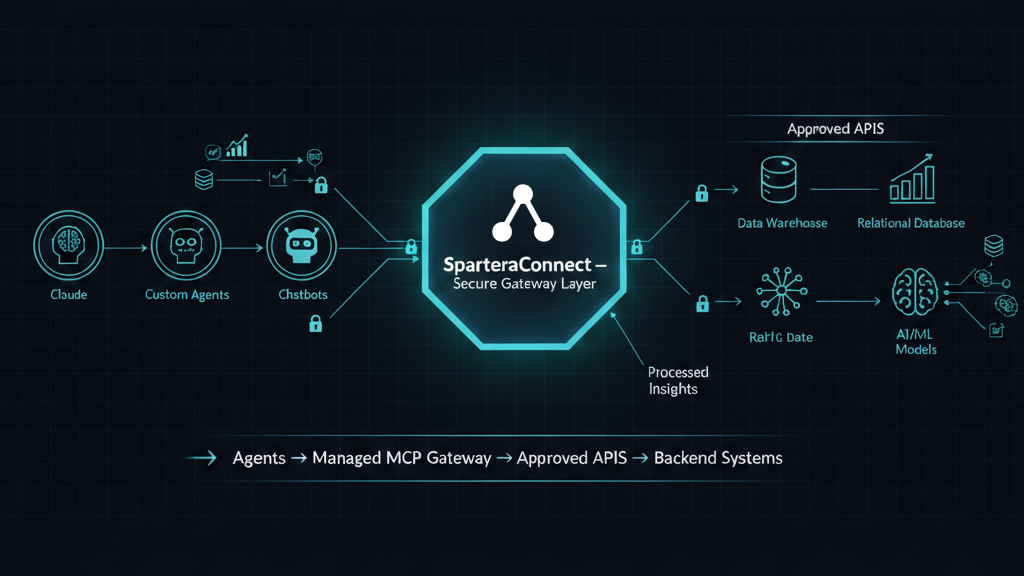
AI agents discover and invoke analytics autonomously based on conversational context.
Example:
You to Claude: 'Should we expand our coffee chain in California or Oregon?'
Claude (via MCP):
• Discovers market density analytics available
• Invokes analysis for both states
• Receives: California 0.78, Oregon 0.41
• Responds: 'California shows 90% stronger market conditions. Recommend allocating 70% of capital there.'
You never had to:
• Know the analytics existed
• Navigate to a marketplace
• Manually compare results
The agent handled everything. This is the paradigm shift.
Spartera's MCP Solution:
We now offer MCP Servers as a Service to help businesses expose their data as analytics to chatbots, AI agents, and autonomous systems. Turn your proprietary data into AI-discoverable insights without moving a single byte.
Calculate Your Paradigm Tax
Your Annual Paradigm Tax
Current State (Paradigm 2)
Future State (Paradigm 3)Recommended
Real Transformation: How One Healthcare Network Evolved Through All Four Paradigms
A regional healthcare network with 23 hospitals didn't plan to become a case study in paradigm shifts. They simply tried to keep up with technology over 16 years. What emerged was a perfect chronicle of how each evolution delivered value:
| Period | Paradigm | Annual Cost | Time to Insight | Adoption |
|---|---|---|---|---|
| 2008-2012 | Flat Files | $5.6M | 15-30 days | 43% |
| 2012-2019 | Raw APIs | $6.27M | 2-5 days | 43% |
| 2020-2023 | AaaS | $733K | <5 min | 89% |
| 2024+ | MCP | $545K | <30 sec | 97% |
The CTO's Reflection:
'Each paradigm shift felt risky. But looking back, each evolution delivered massive value while reducing costs. Organizations that wait for proven safety are already too late. The question isn't whether to evolve—it's whether you'll lead or follow.'
Your 180-Day Evolution
Days 1-30: Assess
- ✓Inventory data sharing mechanisms
- ✓Calculate paradigm tax
- ✓Identify top 20 use cases
Days 31-120: Migrate
- ✓Convert top 20 APIs to analytics
- ✓Deploy Spartera marketplace
- ✓Organization-wide rollout
Days 121-180: AI-Enhance
- ✓Deploy Spartera MCP server
- ✓Connect Claude/ChatGPT agents
- ✓Enable autonomous analytics
Total Impact (6 months):
• 80-92% cost reduction
• 250-450% adoption increase
• Time-to-insight: 97% reduction
• ROI: 10-25x in first year
2030: The Death of Raw Data Movement

What dies by 2030:
• Email attachments with CSV files
• REST APIs returning raw database records
• Client-side ETL pipelines
• Manual navigation to dashboards
What dominates:
AI agents autonomously discover analytics, invoke them based on conversational context, and deliver insights before you know to ask.
Example 2030 workflow:
CEO: 'Should we acquire CompanyX?'
AI Agent: [autonomously]
- Discovers internal financial analytics
- Discovers market growth projections
- Discovers antitrust risk assessment
- Discovers cultural compatibility metrics
- Synthesizes into comprehensive recommendation
Time elapsed: 15 seconds. No data moved.
The Spartera Vision:
A world where every question has an answer available, AI agents discover and invoke capabilities autonomously, and insights flow freely while data remains protected.
This isn't science fiction—it's available today. Spartera's MCP Servers as a Service already enable businesses to expose their data to AI agents and chatbots, making autonomous analytics a reality now, not in 2030.
The Choice: Evolve or Extinct
The Uncomfortable Truth
• Emailing CSV files → Using 1990s technology
• REST APIs returning raw data → Using 2005 technology
• Manually navigating dashboards → Using 2018 technology
None were wrong when they were current. They're wrong now.
The Economics of Waiting
If you spend $5M annually on data sharing (Paradigm 2):
• Migrate in 2025: Save $4.65M annually → $25.8M saved over 5 years
• Wait until 2028: Pay $18.5M in paradigm tax before migrating → $46.7M difference
Every quarter you delay costs roughly $1M plus years of competitive advantage.
Your Four Options
1. Migrate to Paradigm 3 in 2025
→ 80-92% cost reduction, 4-6 year head start
2. Migrate to Paradigm 4 in 2025
→ 90-95% cost reduction + impossible-to-quantify competitive moat
3. Wait until 2027-2028
→ Pay $10-20M in paradigm tax while competitors pull ahead
4. Never migrate
→ Become the 2030 equivalent of companies still using fax machines
The Spartera Offer
For Providers
Monetize your analytical capabilities. Seller-controlled data movement.
List Your AnalyticsOur name, Spartera, means 'sharing' in Corsican. We believe true sharing isn't about moving data—it's about moving knowledge.
Stop moving data. Start moving insights.